

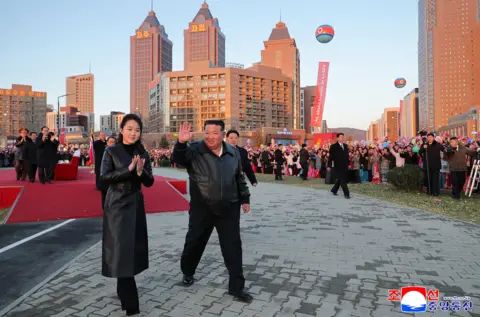
While warnings against South Korea and promises to grow the nuclear weapons programme, a key question lingered at the latest key meeting: could the supreme leader's young daughter be designated as the successor?
Even though conclusive announcement did not emerge at the event, it has fueled a widespread discussion about the young girl's viability as the next leader of the populous state, a regime solely governed by the Kim dynasty.
Growing Presence and Rumors
The young woman has become progressively visible in state media with her leader. However, a great deal about her is still shrouded in mystery. The regime has never officially released her full name or verified her age.
She was initially made known abroad in 2013. Over the years, she is widely thought to be a teenager, partly on intelligence assessments.
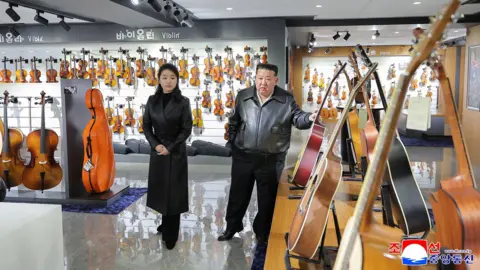
Signs of Future Leadership
Analysts point to several notable signs. Her prominent public sightings—often positioned in the frame—and the use of honorific terms typically reserved for the ruler are seen as strong signals.
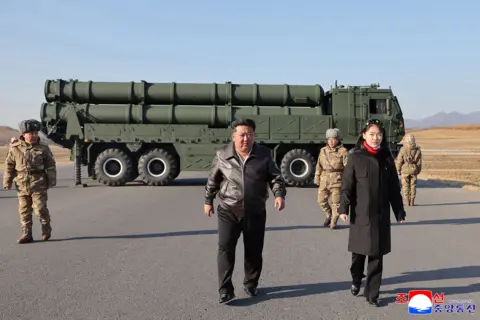
Furthermore, her proximity with the military is deemed another crucial piece. She has reviewed soldiers and weapons together with her father. On several occasions, senior generals have been photographed bending near her to speak during military parades.
"Official broadcasts is using terminology reserved for the supreme leader. It underlines her own iconic image," notes one respected commentator.
Such strategic familiarization is considered essential, as real control in North Korea resides with dominance over the armed forces. To be a legitimate successor, she must present herself as a authoritative figurehead.
Debate Over Gender and Culture
However, a significant counter-argument exists. Some former officials argue that North Korea's deeply patriarchal culture presents an major barrier for a woman ruler.
They point out that women at every level find it hard for equal status. Female officials in top offices are very uncommon. Common superstitions also highlight these norms.
"When it happens, they complete the trip then go to the rear of their car and spit thrice to dispel the misfortune," describes a one-time North Korean official.
Changing Social Norms
Conversely, other analysts contend that the status of females in North Korea has changed dramatically since the 1990s famine.
In that crisis, as the state economy weakened, females often became the primary providers, turning to informal trade. This has allegedly led to a gradual change in societal perceptions.
One expert who has interviewed many defectors suggests that it is currently no longer uncommon to see females in leadership jobs within the country.

"It is wrong to view North Korea with outside logic. We must see them as the Joseon dynasty," says the expert. "Who would dare defy an individual of Kim blood who is assuming the supreme position?"
Succession Maneuvers
Latest political developments are also being analyzed. The appointment of Kim Yo Jong, the leader's powerful sibling, to a influential ideological position is seen by some as a move to position a guardian for the young successor.
Ultimately, experts are split. Some see the spotlight on Ju Ae as a strategic ploy to humanize the leader's reputation and signal another dynastic succession. Others believe the evidence of her preparation are sufficiently clear to ignore.
Either way, the discussion in and of itself may achieve a purpose for the Pyongyang, keeping outside eyes firmly fixed on the isolated Kim family leadership.


